Macau Finance Secretary Tai Kin Ip Resigns for Personal Reasons as Chief Executive Steps In Temporarily
Written by Nils Sullivan · Apr 16, 2026

Macau Finance Secretary Tai Kin Ip Resigns for Personal Reasons as Chief Executive Steps In Temporarily
The Sudden Departure in Macau's Top Economic Role
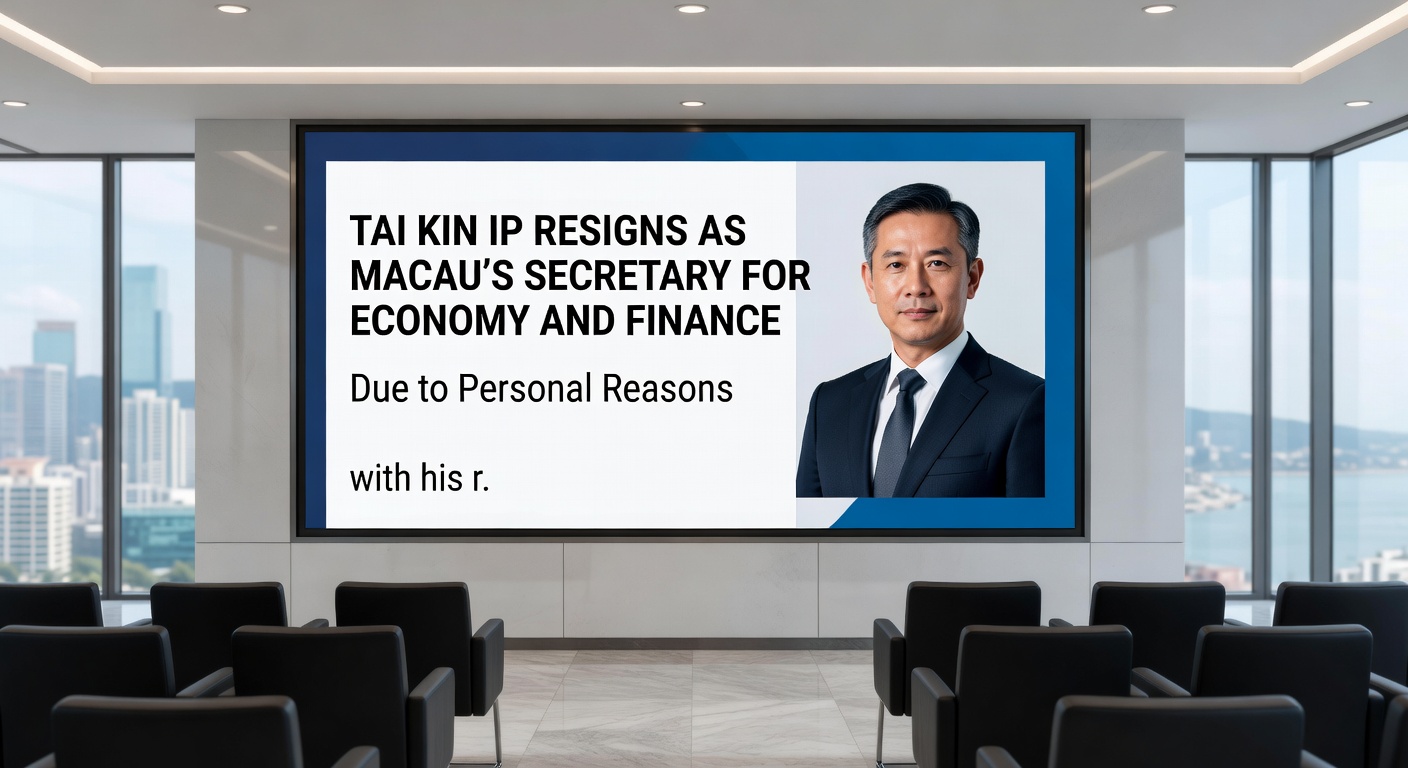
Tai Kin Ip, who served as Macau's Secretary for Economy and Finance, stepped down citing personal reasons; his resignation gained approval from China's State Council following a proposal by Chief Executive Sam Hou Fai, with the official announcement landing on April 16, 2026. This move comes at a pivotal moment for Macau, the global epicenter of gambling revenue where casinos rake in billions annually, and Ip had been at the helm of economic policies since taking office in late 2024. Observers note how such high-level shifts in the semi-autonomous region's leadership often ripple through its tightly regulated gaming sector, especially given Beijing's oversight role.
But here's the thing: Ip's tenure, though relatively brief at under two years, placed him squarely in charge of steering the $30 billion casino industry that defines Macau's economy; major players like Sands China, Wynn Macau, MGM China, SJM Holdings, Melco Resorts, and Galaxy Entertainment all fell under his purview during a period of recovery and diversification efforts post-pandemic. Data from industry trackers reveals Macau's gross gaming revenue hit record highs in recent quarters, underscoring the stakes involved in any leadership change at this level.
Sam Hou Fai, Macau's Chief Executive since December 2024, now assumes the Secretary role on an interim basis while authorities line up a permanent replacement for Beijing's nod; this temporary arrangement ensures continuity in a sector where policy decisions directly impact everything from licensing to tourism flows. Turns out, such interim steps aren't uncommon in Macau's governance structure, where the Chief Executive holds significant sway under the "one country, two systems" framework established in 1999.
Tai Kin Ip's Role in Macau's Economic Landscape
Appointed in late 2024, Ip quickly immersed himself in managing Macau's dual pillars of economy and finance, with the gaming industry as the undisputed heavyweight; figures from the Macau Gaming Inspection and Coordination Bureau show how the six licensed concessionaires—those same Sands, Wynn, MGM, SJM, Melco, and Galaxy outfits—generated over $30 billion in gross gaming revenue last year alone, dwarfing even Las Vegas Strip totals. During his watch, Ip oversaw regulatory tweaks aimed at bolstering non-gaming diversification, like boosting conventions and entertainment to attract high-rollers beyond pure gambling.
And while personal reasons prompted his exit—details of which remain private, as is standard in such announcements—experts who've tracked Macau's bureaucracy point out Ip's background in finance and public administration equipped him well for the post; prior roles included stints in economic planning bodies, where he navigated the delicate balance between local autonomy and central government directives from Beijing. What's interesting is how his departure aligns with ongoing economic reforms pushed by Chief Executive Sam Hou Fai, who has emphasized fiscal prudence amid fluctuating visitor numbers from mainland China.
People familiar with the scene often highlight Ip's involvement in recent licensing renewals for the big six operators, a process finalized in early 2025 that extended concessions through 2032; those deals came with strings attached, mandating investments in non-gaming projects totaling tens of billions, a move designed to wean Macau off its gambling dependency over time. Yet, with gaming still accounting for about 80% of government revenue according to official stats, Ip's oversight proved crucial during quarterly surges that saw VIP baccarat tables buzzing again.
Announcement Details and Approval Process
The resignation hit the wires on April 16, 2026, via official channels in Macau, with Reuters reporting the State Council's swift approval at Sam Hou Fai's behest; this procedural step underscores China's ultimate authority over senior appointments in the Special Administrative Region, a fact baked into the Basic Law governing Macau since its handover from Portugal. That Reuters dispatch captured the essence: personal reasons, no further elaboration, and an immediate interim pivot to Hou Fai.
So, as the news broke amid Macau's spring tourism uptick—April often sees mainland visitors flooding in for holidays—authorities moved fast to nominate a successor, a process that typically involves vetting by local committees before Beijing's green light. Observers who've studied similar transitions, like past finance secretary changes, note they rarely disrupt day-to-day operations; the gaming regulators keep humming, with daily revenue reports flowing uninterrupted from the casino floors.
It's noteworthy that Ip's exit occurs against a backdrop of stabilized post-COVID growth; data indicates gaming revenue climbed 20% year-over-year in early 2026, fueled by relaxed travel policies and marketing blitzes targeting affluent Chinese punters, yet challenges like anti-corruption drives in Beijing continue to temper VIP volumes. Those who've followed the beat know how finance secretaries like Ip often juggle these dynamics, balancing Beijing's diversification mandates with the industry's profit imperatives.
Interim Leadership Under Chief Executive Sam Hou Fai
Sam Hou Fai, a judge by training who ascended to Chief Executive in late 2024, now doubles up on duties, a setup that buys time for a replacement search; his plate already full with broader policy oversight, this interim stint highlights the interconnectedness of Macau's executive roles. Hou Fai's administration has prioritized economic resilience, rolling out incentives for integrated resorts that blend gaming with MICE—meetings, incentives, conferences, exhibitions—to hit government targets of 100 million annual visitors by decade's end.
But here's where it gets interesting: during Ip's time, policies under Hou Fai's direction ramped up enforcement on junket operators, those middlemen who lure high-stakes players, leading to a leaner but more compliant ecosystem; industry reports from groups like the American Gaming Association (which tracks global peers) reflect how Macau's model influences Asia-Pacific trends, with mass-market gaming now outpacing VIP segments. Hou Fai's temporary helm ensures these trajectories stay on course, at least through the nomination phase.
Take one case from recent history: when a prior secretary shifted roles in 2022, the interim period lasted mere weeks before a seamless handover, minimizing market jitters; stock prices for listed operators like Galaxy Entertainment dipped just 1% on that news before rebounding, a pattern likely to repeat here given the personal nature of the resignation.
Context of Macau's Gaming Dominance
Macau's casinos, clustered on the Cotai Strip and older Taipa venues, draw over 30 million tourists yearly, with gaming floors spanning millions of square feet; Sands China's behemoths like The Venetian lead in scale, while Wynn and MGM emphasize luxury, SJM holds legacy Portuguese flair, Melco pushes innovation, and Galaxy caters to masses—each contributing chunks of that $30 billion pie under Ip's regulatory gaze. Studies from regional analysts reveal how integrated resorts now feature theaters, arenas, and malls, fulfilling Beijing-mandated shifts that Ip helped implement.
Now, with the resignation fresh, the focus turns to who might fill the void; candidates often hail from finance or gaming inspection backgrounds, vetted for alignment with central policies. And although personal reasons dominate the narrative, the timing in April 2026—peak season ramp-up—prompts questions on continuity, though official statements stress stability.
That's the reality: Macau's economy, turbocharged by these six concessionaires, weathers leadership changes through institutional buffers, with the State Council's approval acting as the ultimate seal. Experts observe how such events, while headline-grabbing, rarely derail the sector's momentum.
Looking Ahead: Stability in Transition
As Sam Hou Fai steers the ship temporarily, the nomination process unfolds swiftly, mirroring past efficiencies; Beijing's role ensures picks align with national priorities like economic security and anti-money laundering rigor. Data shows Macau's reserves swelling to historic levels, providing a cushion regardless of who takes the Secretary seat long-term.
Yet, the writing's on the wall: Ip's departure marks a chapter close in a story of rebound, where gaming's crown jewel status endures amid diversification pushes. Observers expect minimal disruption, with operators like Melco and MGM already touting Q2 projections that factor in steady policy.
Conclusion
Tai Kin Ip's resignation on personal grounds, approved April 16, 2026, by China's State Council at Chief Executive Sam Hou Fai's proposal, underscores the structured governance guiding Macau's $30 billion casino realm; Hou Fai's interim assumption keeps operations fluid while a successor emerges. This event, rooted in Ip's late-2024 start overseeing giants like Sands China and Wynn Macau, highlights the sector's resilience, where personal shifts rarely upend the economic engine driving the world's top gambling hub forward.