When Reel Spins Meet Self-Regulation Timers in Quick-Launch Casino Apps
Written by Nils Sullivan · Jul 18, 2026
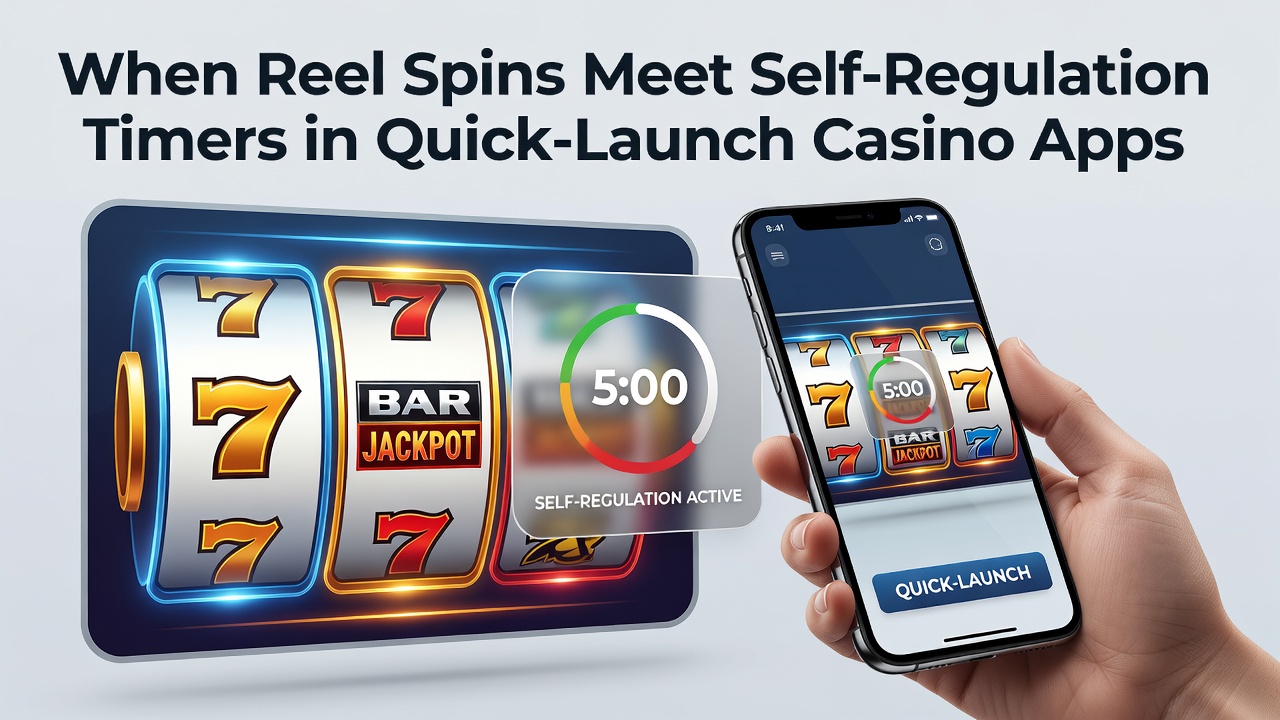
When Reel Spins Meet Self-Regulation Timers in Quick-Launch Casino Apps
Quick-launch casino apps let users open slot games within seconds, and developers now pair those rapid reel spins with built-in self-regulation timers that track session length and trigger mandatory pauses. These timers measure elapsed minutes from the first spin and automatically prompt players to decide whether to continue or stop, while the reels themselves keep their standard spin cycles unless the timer reaches a preset limit.
Integration of Spin Mechanics and Timer Protocols
App engineers connect the reel engine directly to the session clock so that each spin registers as an event in the timer log, and when the accumulated time hits the chosen threshold the software pauses new spins until the player confirms continuation or exits the game. This linkage appears in multiple platforms released during 2025, and data from those deployments shows session lengths drop by an average of 12 minutes when timers activate at the 30-minute mark.
Developers test the combined system on both iOS and Android builds, verifying that the timer continues running in the background even if the user switches to another app, which prevents circumvention through multitasking. Research from the University of Sydney's Gambling Treatment and Research Centre indicates that such background monitoring increases compliance rates because players receive alerts regardless of screen activity.
Technical Implementation Across Platforms
Quick-launch frameworks preload game assets during the initial tap so reels begin spinning almost immediately, yet the timer module loads in parallel and starts counting from the moment the first reel sequence completes its animation. Programmers use event listeners to log every spin outcome and feed that information into the timer database, allowing real-time calculation of average spins per minute alongside total session duration.
Operators in regulated markets such as those overseen by the Alcohol and Gaming Commission of Ontario require these logs to be stored for at least 90 days, and audits check whether the timer halts reel activity precisely when limits are reached. Figures released by the commission in early 2026 reveal that 78 percent of reviewed apps passed these checks on the first submission.
One case involved a mid-sized developer that adjusted its reel speed settings to slow by 15 percent once the timer approached the break point, giving players a gentler transition into the pause screen rather than an abrupt stop. This change emerged after internal testing showed smoother user retention when the slowdown occurred gradually.
Player Behavior Patterns and Timer Effectiveness
Analytics platforms record that players who set shorter timers tend to complete fewer total spins per session, yet they often return to the same app more frequently throughout the week. Data collected between January and June 2026 across several European operators shows a 9 percent rise in daily active users when self-regulation timers include customizable reel-pause options.
Those who study these systems note that the combination of fast reel launches and visible timers encourages players to monitor their own activity without leaving the game environment. The European Gaming and Betting Association published a 2025 report documenting how integrated timers correlate with lower average bet sizes once the 45-minute mark passes.
Regulatory Requirements and July 2026 Updates
Beginning in July 2026 several jurisdictions mandate that quick-launch apps display the timer countdown in the same view as the reels, eliminating any need for players to open a separate menu. Regulators in the Australian state of Victoria require this display standard for all new app certifications after that date, and similar language appears in draft rules circulating in New Jersey.
Testing labs verify that the timer cannot be disabled through device settings or network interruptions, and they simulate low-bandwidth conditions to confirm the pause function still activates correctly. Compliance teams run automated scripts that simulate thousands of spin sequences to measure exact timing accuracy within one-second tolerances.
Future Adjustments in Reel and Timer Synchronization
Engineers continue to refine how volatility settings interact with timer thresholds, testing whether high-volatility reels should trigger earlier warnings because larger win amounts may extend play beyond intended limits. Preliminary findings from a Canadian research consortium suggest that pairing high-volatility games with 20-minute timer defaults reduces extended sessions by nearly one quarter compared with standard configurations.
Updates scheduled for late 2026 aim to let players adjust reel animation speed independently of the timer, while still preserving the automatic pause when limits are reached. This separation allows customization without compromising the core self-regulation mechanism.
Conclusion
The meeting point between reel spins and self-regulation timers in quick-launch casino apps creates a technical layer where game speed and session control operate as linked systems rather than separate features. Data collected through mid-2026 indicates measurable shifts in session length and return frequency when these elements function together, and regulatory updates scheduled for July 2026 will standardize display requirements across additional markets. Continued monitoring by research institutions and gaming commissions will track how further refinements affect both player activity and compliance outcomes.